Rust Stains on Concrete From Sprinklers or Furniture? What Actually Gets Them Out
Quick Answer: Rust stains on concrete almost always come from dissolved iron, either in irrigation water that oxidizes on contact with air, or from metal furniture, pots, and downspouts that bleed onto the surface after rain. Soap, bleach, and pressure alone won't remove them, because the iron has chemically bonded to the concrete rather than sitting on top of it as dirt. A dedicated rust-lifting treatment built around oxalic or phosphoric acid, not muriatic acid, pulls the stain out in roughly 15 to 60 minutes without etching the surface. Rutgers University Extension notes that irrigation water carrying more than about 0.3 parts per million of iron is enough to cause visible staining, a level that's common in the private wells many Atlanta-area homes rely on. Once the existing stain is gone, the fix that keeps it from returning is addressing the source, whether that's a sprinkler head, a planter, or the well water itself.
A driveway in Kennesaw gets hosed down every weekend, and every weekend the same reddish-orange blotches reappear in the exact same spots, right where the sprinkler heads sit along the edge of the concrete. The homeowner has tried dish soap, a stiff-bristle brush, and a full pass with the pressure washer. The dirt lifts every time. The rust doesn't. A few doors down, a different set of stains rings the base of a wrought-iron planter stand that's sat on the same patio slab for two summers.
If either of those situations sounds familiar, you're not dealing with ordinary grime. You're dealing with iron that has already oxidized and bonded into the surface of your concrete, and that calls for a different approach than the degreaser and scrub brush that work fine on tire marks or leaf stains.
Where the Iron Is Actually Coming From
Before treating a rust stain, it helps to know what's putting it there in the first place, because the fix is different depending on the source.
Irrigation And Well Water
Many homes across Acworth, Kennesaw, Cartersville, and the surrounding metro area draw irrigation water from private wells, and well water in this part of Georgia commonly carries dissolved iron. That iron is invisible in the water itself. It's only when the spray hits air and concrete that it oxidizes into the orange residue you can see. Rutgers University Extension has found that iron concentrations above roughly 0.3 parts per million in irrigation water are enough to cause staining on hardscape and siding, a level that's easy to exceed in untreated well water. If your stains form in a ring or a fan pattern radiating out from a sprinkler head, this is almost always the cause.
Metal Furniture, Planters, And Fixtures
Wrought-iron chairs, plant stands, charcoal grills, bike racks, and even the metal legs on a folding table will rust where moisture collects, and that rust washes down onto the concrete underneath every time it rains or gets watered nearby. These stains show up as a footprint that matches the shape of the object sitting on the slab.
Fertilizer With An Iron Additive
Some lawn and garden fertilizers include iron to green up grass, and overspray or runoff that lands on a driveway or walkway edge leaves the same kind of staining. This is one of the more common causes on properties bordering a lawn that gets regular treatment.
Rebar Or Tie-Wire Bleeding Through
Less often, rust stains come from inside the concrete itself, where reinforcing steel sits too close to the surface and moisture eventually reaches it. These stains tend to follow a straight or grid-like line rather than a splash pattern, and they can be a sign worth having a contractor look at, separate from the surface cleaning discussed here.
Why Scrubbing, Bleach, and a Pressure Washer Don't Touch It
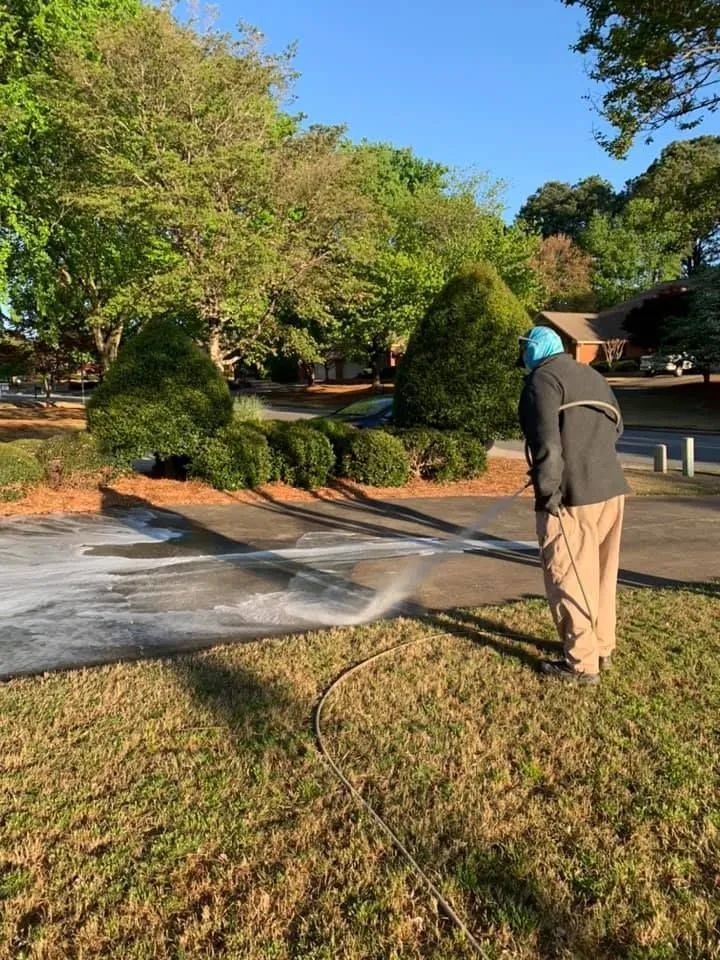
A standard driveway cleaning routine works by breaking the bond between dirt, oil, or organic growth and the concrete surface, then flushing it away with water pressure and a surfactant. Rust doesn't play by those rules. Once iron oxidizes, it forms iron oxide compounds that actually penetrate into the pores of the concrete rather than sitting on top of it. Bleach and dish soap have no effect on iron oxide. Water pressure alone can chip away at the surface layer of a stain over time, but it won't reach what's absorbed below it, and repeated high-pressure attempts on the same spot risk wearing down the concrete itself long before they wear down the stain.
That's why the same rust mark keeps returning after a routine wash, and why homeowners often assume a stain is permanent when the real issue is simply that it needs a chemistry built to target iron specifically.
What Actually Removes Rust From Concrete
The products that reliably lift iron oxide out of concrete are built around a chelating acid, typically oxalic acid or phosphoric acid, rather than a harsh mineral acid. These are mixed into a gel or liquid, applied directly to the stain, and left to sit so the acid can bind to the iron and pull it out of the pores. According to manufacturer guidance from concrete rust-remover producers, most residential stains, including the sprinkler-ring type, clear in about 15 minutes, while more established or years-old staining may need 30 to 60 minutes of dwell time and, occasionally, a second application with light brushing. Once the reaction has finished, the area gets rinsed thoroughly with a forceful stream of water.
Warning: Muriatic acid, also sold as hydrochloric acid, is a common DIY suggestion for rust removal, but it's the wrong tool for the job. It's classified as a corrosive hazard by the EPA and OSHA, capable of causing skin and eye burns on contact, and it's also the same acid contractors use to etch and profile concrete before certain coatings. Used on a rust stain, it frequently strips a thin layer of the concrete surface along with the stain, leaving the treated spot rough, lighter in color, or visibly different from the surrounding slab. That kind of etching can't be undone.
Protecting the Surface While the Stain Comes Out
Because concrete is porous and slightly different from one driveway or patio to the next, a careful rust treatment includes a few steps that a quick DIY pass often skips:
A test patch first. Even on a proven rust-lifting product, a small inconspicuous area gets treated first, especially on colored, stamped, or stained concrete, since some finishes can lighten slightly.
Temperature awareness. Most rust-removal chemistry needs the surface to be above roughly 45 degrees Fahrenheit to work effectively, which matters for anyone tackling this in the cooler months.
Full neutralization. A thorough rinse afterward isn't optional. Leftover acid residue left to dry on the surface can continue reacting and cause uneven lightening over time.
Matching the method to the surface. A slab with reinforcing steel close to the surface, a stamped pattern, or an older, more porous finish needs a gentler hand and closer monitoring than a plain broom-finished driveway.
This is also where a professional eye pays for itself. When we assess a rust stain, we're looking at the age of the slab, whether it's sealed, what caused the staining, and how it's likely to react before we ever apply a treatment, rather than guessing and hoping for the best on a surface that's expensive to replace.
Stopping the Stains From Coming Back
Removing an existing stain only solves half the problem if the source is still active. A few fixes address the root cause directly:
Move or raise metal items. Adding rubber or felt pads under furniture legs, planters, and grills keeps moisture from pooling against bare metal and dripping straight onto the slab.
Redirect or maintain sprinkler heads. A head that's angled onto concrete instead of grass, or one that's started to leak or mist at the base, is worth adjusting or replacing before it creates a new ring stain.
Treat the water, not just the symptom. If higher-than-normal iron levels in well water are the underlying cause, the two common fixes are polyphosphate injection, which keeps iron dissolved in the water so it doesn't oxidize on contact with air, and dedicated iron filtration sized for irrigation flow rates, which removes the iron before it ever reaches a sprinkler head. A basic water test will show which approach makes sense for a given property.
Switch fertilizer formulations.
If iron-fortified fertilizer is the culprit, a formulation without an iron additive, or simply keeping the edge of a spreader pattern off hardscape, prevents the next round of staining.
When to Bring in a Professional
A single small stain from a flowerpot is often manageable as a weekend project with the right product and some patience. Where it makes sense to bring in a pro is when the staining covers a large area, has been building for multiple seasons, sits on colored or decorative concrete, or has already been attempted once with muriatic acid or an aggressive scrub and hasn't fully cleared. In those situations, the risk of making the surface worse, whether through etching, uneven lightening, or driving the iron deeper with repeated pressure, generally outweighs the cost of getting it done correctly the first time.
Frequently Asked Questions
Why do I have rust stains on my concrete if I never use fertilizer?
The most common cause without fertilizer is irrigation water. If your home uses well water, even water that looks perfectly clear can carry dissolved iron that only becomes visible once it's sprayed through a sprinkler head and exposed to air. Metal furniture, downspouts, and fixtures sitting on the slab are the next most likely source, and the stain's shape, a ring, fan, or footprint, usually points to which one it is.
Will pressure washing by itself remove rust stains?
Pressure alone rarely removes rust because the iron has chemically bonded into the pores of the concrete rather than sitting loosely on the surface. Pressure washing is effective at lifting the dirt and grime around a rust stain, which often makes the stain look more obvious once everything else is clean, but the rust itself needs a targeted chemical treatment to actually break down.
Is it safe to use muriatic acid on my driveway to remove rust?
It isn't recommended. Muriatic acid is a strong, corrosive acid that's classified as hazardous to skin and eyes by federal safety agencies, and it's also used specifically to etch and strip concrete surfaces. Using it on a rust stain frequently removes a layer of the concrete along with the stain, leaving the spot rough or discolored in a way that can't be reversed.
How long does it actually take to remove a rust stain from concrete?
Most stains respond to a dedicated rust-removal treatment in about 15 minutes of dwell time. Older or more heavily stained areas can take 30 to 60 minutes, and in stubborn cases, a second application with light brushing clears what the first pass didn't fully lift.
Will the rust stain just come back after it's removed?
It can, if the source is still active. A sprinkler head still spraying iron-rich water, a planter still sitting bare on the slab, or fertilizer with an iron additive will produce a new stain in the same spot even after a clean removal. Addressing the source, whether that's redirecting a sprinkler, adding a pad under furniture, or treating well water, is what makes the fix permanent.
Can rust removal treatments damage colored or stamped concrete?
Done correctly, a quality rust-lifting product is formulated not to etch the concrete, but colored, stained, or stamped finishes can occasionally lighten slightly with any acid-based treatment. That's why a small test patch in an inconspicuous spot always comes first on decorative concrete, and why a professional assessment matters more on higher-end finishes than on a plain driveway.
Keeping Your Concrete Free of Rust Stains
Rust stains on concrete can look permanent, but they are rarely as stubborn as they appear once the right treatment is used. The iron behind sprinkler rings, furniture footprints, and fertilizer splashes responds to a rust lifting chemistry built for that exact job, not to soap, bleach, or repeated pressure. Taking the time to test a small patch, follow the dwell time, and rinse thoroughly protects the slab while the color returns. Skipping harsh acids keeps the surface smooth and evenly toned.
Bio Green Pressure Washing
has spent over 8
years helping homeowners and businesses in Acworth, GA,
restore driveways, walkways, and patios without damaging the concrete underneath. That time has shown that lasting results come from pairing the right cleaning method with a fix for the source, whether it is a misdirected sprinkler head, a bare metal planter, or iron in the well water. Handle both, and the slab stays one even color for many seasons.