Black Streaks on Your Concrete Driveway? Oil, Mildew, and Rust
Quick Answer: Black streaks on a concrete driveway almost always trace back to one of three sources: living organic growth such as algae, mildew, and mold; petroleum stains from oil and grease; or rust bleeding up from metal and mineral-heavy water. Organic growth is the most common culprit in the humid Atlanta metro, and it responds to a low-pressure soft wash with a sodium hypochlorite solution that kills the growth at the root. Oil and rust are chemical stains that need a targeted degreaser or an acid-based rust remover rather than raw water pressure. Blasting concrete with high pressure can etch and scar the surface without touching the actual cause. Identifying which stain you have is the first step to clearing it without damaging the slab.
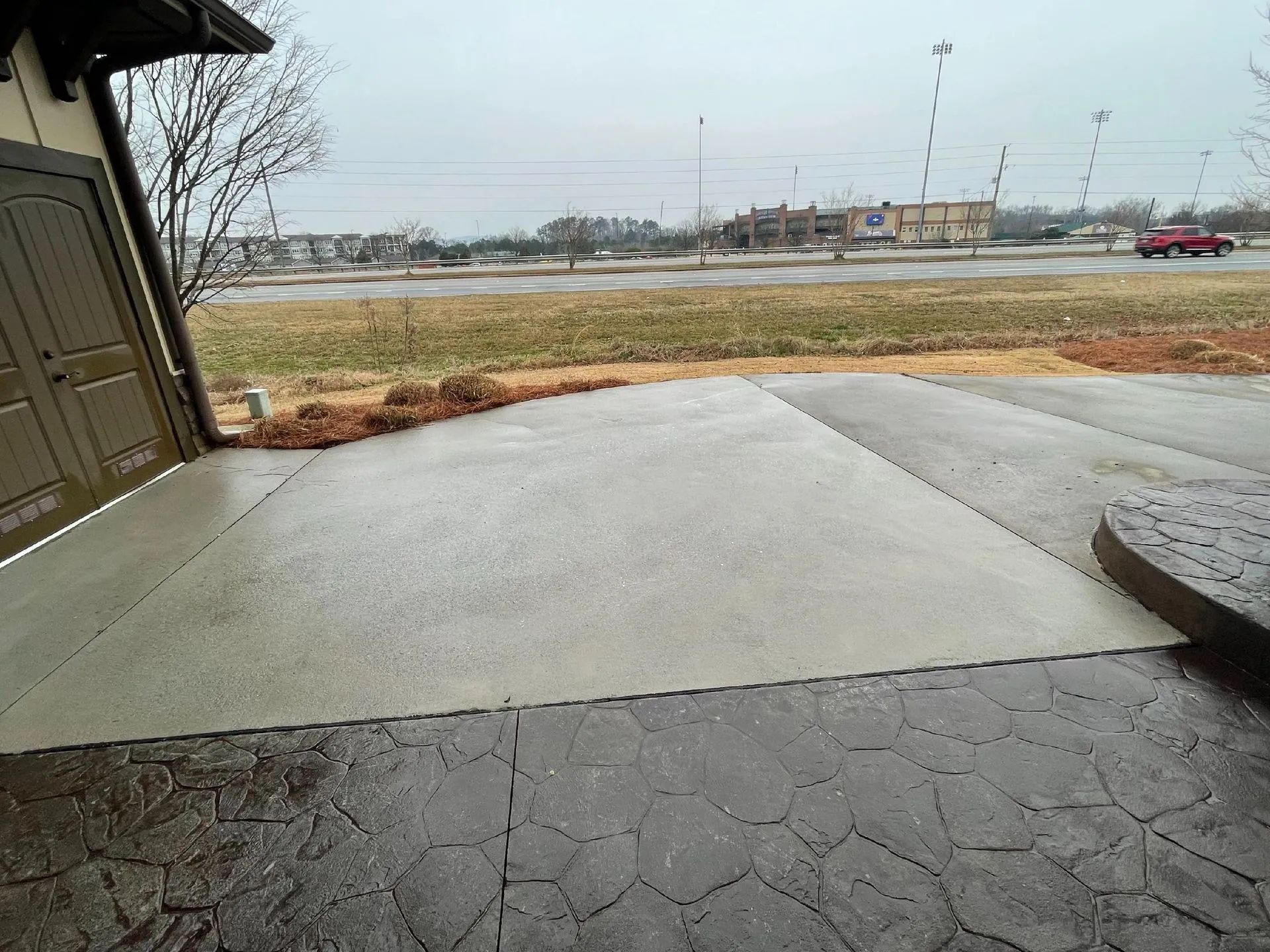
You pull into the driveway after work and the low evening sun catches it at just the right angle. Dark tiger-stripe streaks run down the slope of the concrete, a greasy shadow spreads where the car usually parts, and a rusty halo has crept out from the base of the mailbox post. None of it was there a couple of seasons ago, and no amount of sweeping or rinsing with the garden hose seems to make a dent. Concrete looks permanent, so watching it slowly darken feels like watching your curb appeal quietly slip away. The good news is that those marks are almost never buried deep in the slab. They sit at or near the surface, and once you know which of the three common offenders you are dealing with, each one has a clear and safe path to removal.
Why Concrete Darkens in the First Place
Concrete is porous. Under a hand lens the surface looks less like solid stone and more like a hard sponge, threaded with tiny channels and open pockets. That porosity is exactly why driveways stain so readily. Moisture, airborne spores, dripping fluids, and dissolved minerals all settle into those pores and stay put, protected from the wind and foot traffic that would scatter them off a smoother surface.
In North Georgia the humidity does the rest of the work. Long warm seasons, frequent rain, heavy tree cover, and months of thick pollen give organic growth a steady supply of moisture and food. A driveway that stays shaded by the house or a stand of pines through the morning rarely dries out fully, and that damp, dim environment is where black stains take hold fastest. Add the everyday reality of a vehicle parked in the same spot and metal fixtures anchored into the concrete, and you have the recipe for all three stain types on a single slab.
Reading the Stain: Organic Growth, Oil, or Rust
Before you treat anything, look closely at what you actually have. The three main causes look different, sit in the concrete differently, and each demands its own approach.
Organic black streaks
This widest category fools most people into seeing plain dirt. Algae, mildew, mold, and cyanobacteria called gloeocapsa streak dark green to black along water paths, favoring shaded edges and runoff. Because it lives, rinsing strips the surface while roots regrow.
Oil and grease stains
These appear as darker, glossier blotches where engine, mower, or motorcycle parks. Fresh spills look wet and shiny; older ones fade to brown-black shadows soaked into pores. Oil is chemical, not living, so it never spreads but never rinses away.
Rust stains
Rust reads as orange, red-brown streaks radiating from a fixed point: a metal planter, furniture feet, railing base, surface rebar, or iron-rich sprinkler water. Fertilizer granules do the same. Being a bonded mineral reaction, scrubbing and pressure barely touch it.
The Problem With Blasting It Away
The instinct when you see a filthy driveway is to rent the most powerful pressure washer you can find and blast the marks off. On concrete, that instinct backfires more often than people expect. A narrow zero-degree nozzle or a machine run at very high pressure concentrates enough force to erode the cement paste that holds the surface together. What you are left with is a lighter clean streak surrounded by dirty concrete, wand marks striped across the slab, or a pitted, roughened texture where the fine top layer has been stripped and the aggregate exposed. Newer concrete and decorative finishes are especially vulnerable to this kind of damage.
There is a second problem hiding underneath the first. Even when high pressure does lift some of the black, it only removes what sits on top. With organic growth, the living roots stay anchored in the pores, so the streaks come back, sometimes within a single season. You end up having scarred the concrete without solving the actual cause.
Tip: Before treating the whole driveway, test your method on a small, out-of-the-way corner near the garage or a side path. Give it a day to dry fully and check both the cleaning result and the surface texture. That patch tells you whether you are lifting the stain or slowly wearing down the concrete.
How the Right Method Removes Organic Streaks
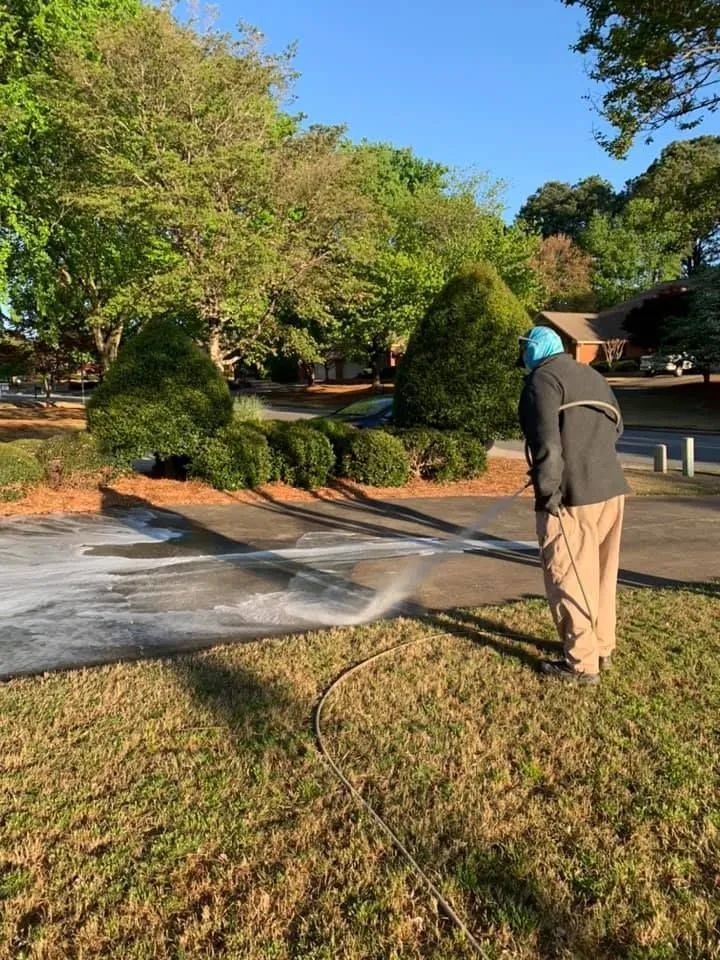
For the black and green organic streaking that covers most Atlanta-area driveways, the effective approach is soft washing rather than raw pressure. Soft washing pairs a cleaning solution with very low water pressure, closer to a strong garden hose than a cutting jet. The work is done by chemistry, not force.
A solution that kills at the root
Professional soft washing relies on a diluted sodium hypochlorite solution, the same active family found in common household bleach, blended with surfactants that help it cling and penetrate. Applied to the concrete and given time to dwell, it kills the algae, mildew, mold, and gloeocapsa all the way down into the pores rather than just rinsing the surface film. Because it destroys the organism instead of masking it, the streaks stay gone far longer than a pressure-only clean.
Low pressure protects the slab
Once the solution has done its job, the growth is rinsed away at a pressure low enough that it never risks etching or striping the concrete. You get an even, uniform result across the whole slab instead of a patchwork of clean lines, and the surface texture stays exactly as it was.
Warning: Sodium hypochlorite solutions can scorch or kill nearby grass, flower beds, and shrubs if they run off untreated or are mixed too strong. Surrounding plants should be pre-wetted and rinsed, and runoff managed carefully. This plant-safety balance and correct dilution are a large part of why organic removal is worth handing to a trained crew rather than improvising with jugs of bleach.
Matching the Treatment to Oil and Rust
Oil and rust do not respond to the same solution that clears organic growth, because they are chemically different problems. Treating them means matching the remover to the stain.
Oil and grease
Petroleum stains call for a dedicated degreaser that breaks down and lifts the oil out of the pores, often paired with heat, since hot water helps loosen and emulsify grease far better than cold. The degreaser is worked into the stain, given time to draw the oil up, and then rinsed. Deep or old spills sometimes need more than one pass, because the oil has migrated well below the surface over months of soaking in.
Rust
Because rust is a mineral bonded into the concrete by a chemical reaction, it takes an acid-based approach to reverse it, typically oxalic acid or a specialty rust remover formulated for masonry. The product converts and releases the iron staining so it can be rinsed clear, something no amount of scrubbing or pressure will accomplish on its own. Strength and dwell time have to be controlled carefully, because the wrong concentration on concrete can lighten or etch the surface it is meant to save.
Keeping Black Streaks From Coming Back
Clearing the driveway is only half the battle in a climate this humid. A few habits stretch the results and slow the return of organic growth in particular. Improve drainage and trim back branches so the slab gets more sun and dries faster after rain, since the drier the concrete stays, the harder it is for algae to reestablish. Keep sprinkler heads aimed at the lawn rather than the driveway to cut down on both constant moisture and iron staining from the water. Move metal furniture and planters off bare concrete, or set them on pads, to prevent fresh rust halos. Sweep away pollen and leaf litter through the spring and fall so decaying organic matter is not sitting on the surface feeding new growth. With a proper soft wash as the reset and reasonable upkeep after, most driveways stay clean for far longer between cleanings.
Frequently Asked Questions
Are black streaks on my concrete driveway mold or just dirt?
If the marks streak along water paths, cluster on the shaded side, and feel slick when wet, it's organic growth, not dirt. Dirt rinses off, while growth returns because its roots stay embedded.
Will a pressure washer remove black streaks from my driveway?
High pressure often makes things worse, etching the surface and leaving wand marks while the roots survive and regrow. A low-pressure soft wash that kills growth at the root clears streaks more completely without scarring.
Can old oil stains actually come out of concrete?
In most cases, yes, though deep stains take patience. A dedicated degreaser, often used with hot water, breaks down the petroleum and draws it from the pores. Heavier spills may need more than one treatment.
What causes rust stains on a driveway?
Rust comes from iron reacting with moisture on concrete. Common sources are metal furniture, railing bases, surface rebar, iron-rich sprinkler water, and fertilizer granules. Because it's a bonded mineral, it needs an acid-based rust remover.
Why do the streaks keep coming back after I clean them?
Recurring streaks signal organic growth removed only on the surface. Rinsing knocks off the top layer, but roots stay alive in the pores and regrow in shade and damp. A soft wash kills them completely.
Is soft washing safe for my plants and landscaping?
It can be, done carefully. The sodium hypochlorite solution can harm plants if it runs off untreated or mixes too strong, so landscaping should be pre-wetted, shielded, and rinsed. That's why experienced crews matter.
Give Your Driveway a Clean Start
A concrete driveway that has gone dark with streaks is not a lost cause and it does not have to be scarred by aggressive pressure to come clean. Once you can read the stain, whether it is organic growth spreading down the shaded slope, an oil shadow soaked into the parking spot, or a rust halo creeping from a metal base, the right method restores the concrete without harming the surface underneath. Picture a driveway that reads as bright, even, and uniform from the street again, with no wand marks and no lingering black.
Bio Green Pressure Washing
brings eco-friendly soft washing to exactly this problem, using low-pressure sodium hypochlorite treatment to kill organic streaks at the root and targeted
degreasing and rust removal
for the stains that need them, all while protecting your slab and your landscaping. With over 8
years of experience serving residential and commercial properties in and around Acworth, GA, plus specialized drone and high-rise capability for the tough spots, the crew matches the treatment to your specific surface and stain. When you are ready to see your concrete restored instead of worn down, request an estimate from Bio Green Pressure Washing
and get your driveway back to a clean, streak-free start.