Green or Black Stains on Your Siding? What Soft Washing Removes
Quick Answer: Green streaks on siding are usually algae, while black or dark gray patches are typically mold or mildew — both living organisms feeding on moisture and organic residue trapped on the surface, not just dirt sitting on top. Pressure washing alone shears off the visible layer but leaves the root structure embedded in the siding, which is why stains often return within weeks. Soft washing applies a cleaning solution that kills the organism at the root, so the surface stays clean instead of just looking clean temporarily.
Green streaks creeping up the shaded side of your house, or black patches spreading low where sprinklers hit the siding — these aren't stains the way a spilled drink stains a carpet. They're alive. Knowing what's actually growing there changes how it needs to be treated, and it's the reason a pressure-washed house can look clean one month and streaked again the next.
What's Actually Growing on the Siding
Green growth is typically algae
Algae needs moisture and a surface to cling to, which is why it shows up most on shaded sides of a house, under eaves, or anywhere sprinkler overspray keeps the siding consistently damp. It spreads as a thin film at first, then thickens into visible streaks.
Black or dark gray patches are usually mold or mildew
These fungi feed on organic residue — pollen, dust, algae remnants — that builds up on siding over time, and they tend to favor spots with less direct sunlight and airflow, like the corners behind shrubs or the north-facing wall.
Both are rooted, not surface-level
This is the part that trips up a plain pressure wash. Algae and mildew don't just sit on top of the siding — they anchor into its texture and any tiny surface imperfections, which means removing the visible color doesn't necessarily remove the organism causing it.
Why Pressure Alone Doesn't Solve the Problem
High-pressure water shears off what's visible and stops there
A pressure washer can blast away the colored film fast, and the siding looks clean immediately afterward. But if the root structure of the algae or mold survives underneath, it starts regrowing right away — often becoming visible again within a matter of weeks rather than months.
Vinyl and painted siding weren't built for that kind of force anyway
Beyond the regrowth issue, high pressure aimed directly at siding risks driving water up under the laps and seams, or lifting and chipping paint on fiber cement — damage that has nothing to do with the algae and everything to do with the tool used to remove it.
Tip: If a house was pressure washed for algae or mold last year and the same stains are back in the same spots, that's a strong sign the root structure wasn't actually killed the first time — worth switching to a soft-wash approach rather than repeating the same pressure wash again.
How Soft Washing Kills the Growth at the Root
Soft washing uses a cleaning solution — typically built around a controlled, diluted concentration suited to the surface — applied at low pressure and left in contact with the siding long enough to work chemically rather than mechanically.
The solution oxidizes the organism itself
Rather than just physically scraping color off a surface, the active ingredient breaks down the cell structure of the algae or mold, which is what stops it from simply growing back in the same footprint.
Low pressure is what makes the chemistry effective
If the solution were rinsed away immediately, it wouldn't have time to finish working. Low pressure keeps it in contact with the siding long enough to complete the process, then a gentle rinse clears the dead organism and residue away.
This is also why soft washing lasts longer
Because the root structure gets addressed instead of just the visible surface, a properly soft-washed section of siding typically stays cleaner for a longer stretch than the same section would after pressure washing alone.
Not every dark patch on the siding is biological growth, either. Dirt buildup and pollen residue respond fine to a standard wash without any of this. Figuring out which one you're actually looking at is what decides the right method to use.
Warning: Avoid mixing your own concentrated cleaning solution for a DIY soft wash on painted or vinyl siding. An overly strong mix can bleach color out of vinyl or damage nearby plants and landscaping if it isn't diluted and rinsed correctly — this is exactly the kind of job where getting the ratio wrong causes more visible damage than the algae did.
Where This Growth Tends to Show Up First
In a humid climate, siding rarely dries evenly across a whole house. The shaded north side stays damp longer after rain. Areas under a deep roofline or behind mature landscaping get less direct sun and airflow. Sprinkler heads that clip the bottom few feet of siding keep that section wetter than the rest of the wall. All of these spots become the first places algae or mold takes hold, which is why staining often follows a predictable pattern around a house rather than appearing randomly.
Why Siding Material Changes the Approach
Not every type of siding responds to soft washing the same way, and matching the solution and technique to the material is part of what keeps the process safe. Vinyl siding is relatively forgiving of a properly diluted solution but can show bleaching or discoloration if the mix is too strong, which is why concentration matters more than most homeowners assume. Fiber cement siding holds up well to soft washing but has seams and butt joints where solution can pool if it isn't rinsed thoroughly, and any pooling left too long can leave its own faint residue mark. Wood siding is the most sensitive of the three — overly aggressive chemical concentrations or excessive dwell time can affect the wood's natural coloring or existing stain finish, so wood typically calls for a gentler formulation and closer attention during application than vinyl or fiber cement need.
Painted surfaces add another layer of consideration. A soft-wash solution strong enough to kill algae effectively can, at the wrong concentration, also dull certain paint finishes over repeated treatments — which is part of why professional soft washing calibrates concentration by surface rather than using one universal mix for every job.
What a Full Soft-Wash Visit Looks Like
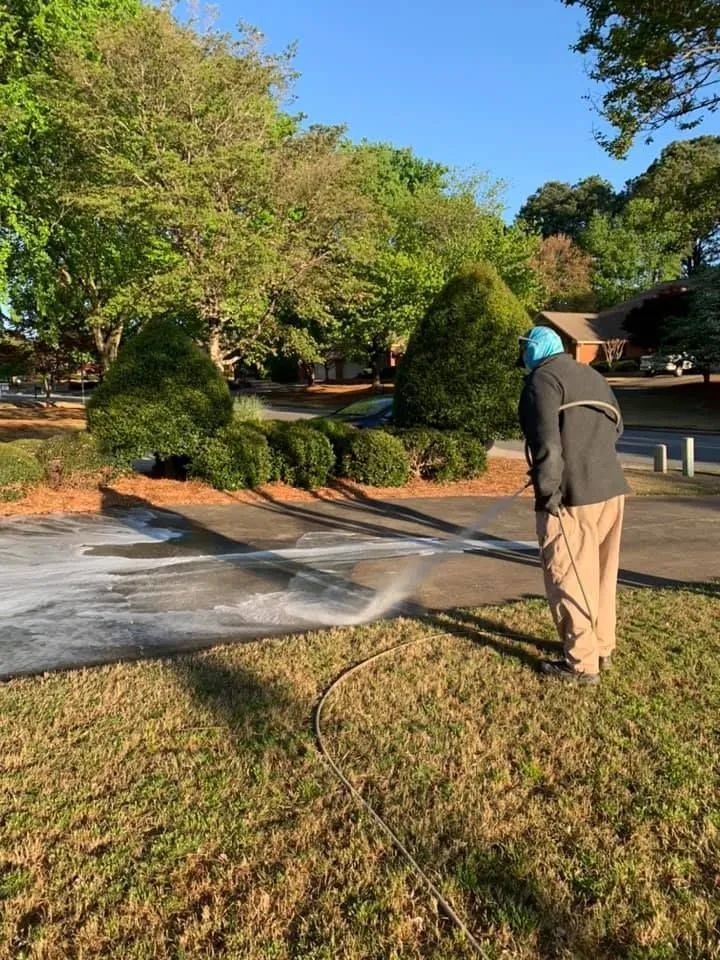
A soft wash typically starts with pre-wetting the landscaping around the house, since the solution used to treat siding shouldn't sit directly on plants or grass for an extended period. From there, the solution gets applied evenly across the affected sections and allowed to dwell — the exact time depends on how established the algae or mildew is, with heavier growth generally needing longer contact time than a light green film that's just starting to show.
A final low-pressure rinse clears both the dead growth and any remaining solution.
This step matters as much as the application itself, since leftover solution residue can leave its own faint film if it isn't rinsed completely, and a thorough rinse is what leaves the siding looking genuinely clean rather than just chemically treated.
Frequently Asked Questions
How is soft washing different from just using a milder pressure setting?
It's not about turning the pressure down on the same process — soft washing relies on a cleaning solution doing the actual work of killing the organism, with low pressure only used to apply and rinse it. A pressure washer on its lowest setting still isn't delivering the chemical treatment that makes soft washing effective long-term.
Why does algae keep coming back after I've pressure washed it before?
Pressure washing removes the visible layer but typically leaves the root structure of the algae embedded in the siding's texture, so it regrows from what's left behind rather than starting fresh. Soft washing addresses that root structure directly, which is why the results tend to hold longer.
Is soft washing safe for vinyl siding?
Yes, when the solution is properly diluted for the surface and applied by someone experienced with the process. The risk isn't the method itself — it's an incorrectly mixed solution, which is why this isn't the easiest job to take on without the right equipment and ratios.
Will soft washing damage my landscaping?
A professional soft wash accounts for nearby plants, typically by pre-wetting landscaping and rinsing it afterward to dilute any solution that drifts during application. Landscaping damage is more commonly a DIY-mixing issue than a soft-washing issue itself.
How often does siding need to be soft washed?
That depends heavily on how much shade and moisture a particular side of the house gets. A consistently shaded or sprinkler-exposed section can need attention well before a sun-exposed wall shows any growth at all.
Why Some Sections Regrow Faster Than Others
Even after a thorough soft wash, it's common for one section of siding to show new growth well before the rest of the house does. That's rarely a sign the treatment failed — it usually just means that section has conditions that favor regrowth more than the rest of the exterior does. A wall that stays shaded through most of the day, sits close to dense landscaping that blocks airflow, or catches regular overspray from a sprinkler zone will naturally trend back toward algae or mildew faster than a wall with better sun and air circulation.
Trimming back nearby vegetation can extend results. Shrubs or tree branches growing close against siding hold moisture against the surface and block the airflow that would otherwise help it dry between rainfalls, so pulling growth back a few inches from the wall is one of the simpler ways to slow how quickly a soft-washed section needs attention again.
Treating the Cause, Not Just the Color
Green and black staining on siding isn't dirt that needs a stronger blast of water — it's a living organism that needs to be killed at the root to actually stay gone. Soft washing does that work chemically, at low pressure, in a way that protects the siding underneath while getting a longer-lasting result than pressure alone ever delivers.
Request a
soft-wash
estimate for your siding with Bio Green Pressure Washing. The team will identify what's actually growing on your home's exterior and treat it at the root with an eco-friendly soft-wash solution suited to your siding type. With 8
years of residential and commercial experience across Acworth, GA, Bio Green Pressure Washing
gets siding clean in a way that holds up, not just for a few weeks. Reach out to Bio Bio Green Pressure Washing
to stop the regrowth cycle on your siding for good.